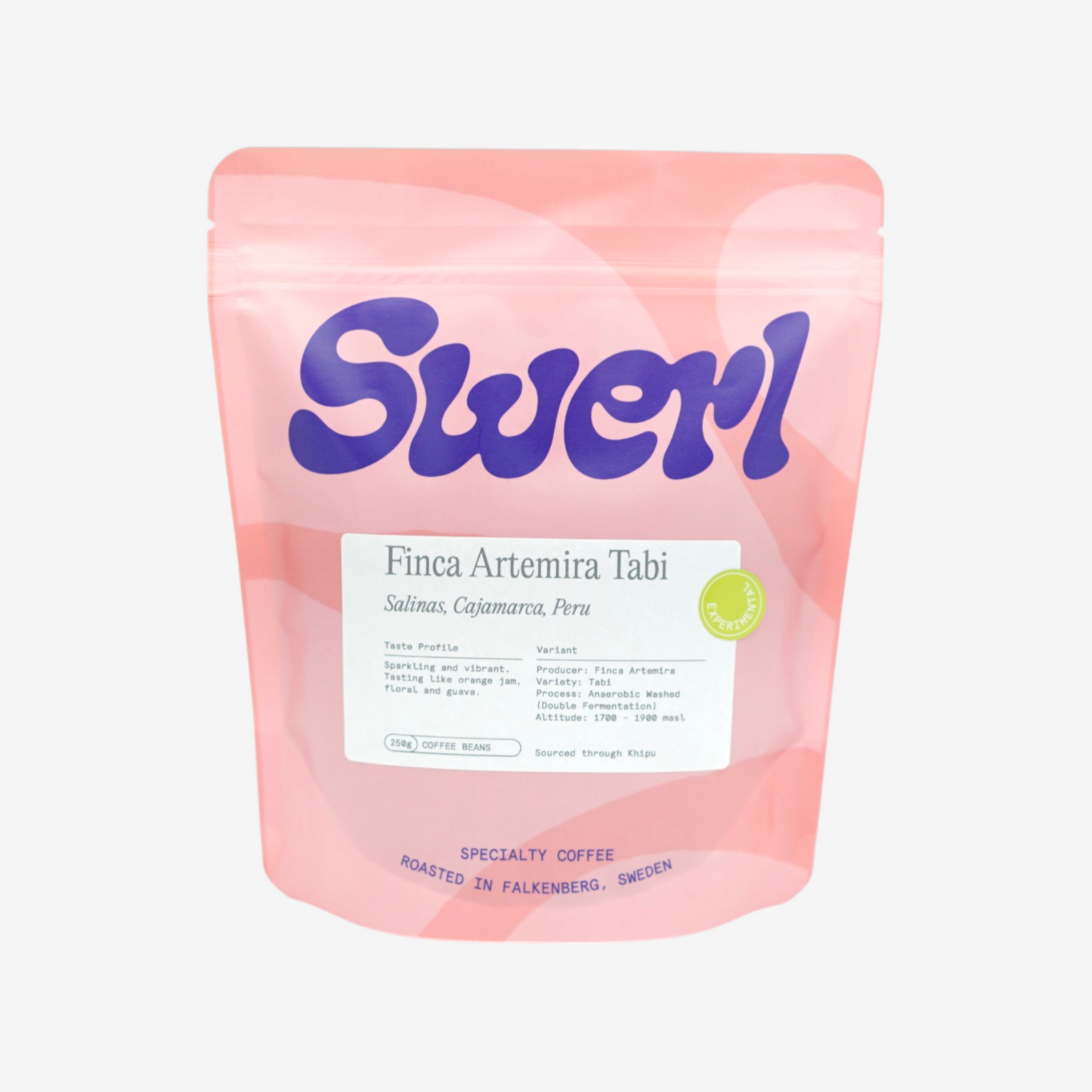

ANAEROBIC DOUBLE FERMENTED WASHED TABI - SWEET, ORANGE JAM, GUAVA
Finca Artemira Tabi Filter - Peru
Finca Artemira Tabi Filter - Peru
Couldn't load pickup availability
Sweet and sparkling. Tasting like orange jam and guava.
Origin: Peru
Region: Salinas, Cajamarca
Producer: Finca Artemira
Elevation: 1700 - 1900 masl
Variety: Tabi
Process: Anaerobic Double Fermented & Washed
Roasted for: Filter, but also delicious as espresso
-
Ebert Huaman Villegas is a young and dedicated coffee producer from Salinas, a village in the San Jose de Lourdes District, part of the San Ignacio Province, in Cajamarca Region. He's starting to become known for his coffee quality and expertise in Peru as in 2022 he finished 6th in a regional competition, Expo Cajamarca, while in 2023 he finished 18th in the Cup of Excellence.
Ebert and his family are collectively known as Finca Artemira, named after Ebert’s mother, and has been operational for over 40 years, however, recently expanded under Ebert's leadership. They cultivate many coffee varietals and other crops for their livelihood, practices regenerative agriculture through coffee agroforestry systems and is continually experimenting with cultivation techniques and processes.
Ebert and his family are deeply committed to sustainable and respectful farming practices. Besides agroforestry systems, they also focus on soil regeneration, and increasing biodiversity. Although their coffee isn't officially organic certified due to cost constraints, they avoid synthetic pesticides and fertilisers, aligning with organic principles.
The family's approach to farming is deeply rooted in tradition and education, aiming to produce high-quality coffee while nurturing their land and community.
--
This coffee is sourced through our partner Khipu, led by Mark Russell and his cousin who is originally from Peru. We have known Mark for a long time and this has been a partnership in the making for a couple of years.
As with all origins that we source from, we aim to find specific partners who share similar core values to our with whom we can develop a long term relationship.
Khipu’s approach focuses on long-term partnerships at origin, prioritizing consistency and mutual growth year after year. They actively seek out producers who have little to no prior export experience, helping introduce their coffees to international markets. This often leads them beyond well-known regions to places like La Libertad, Amazonas, San Martín, and Huancavelica, with plans to expand further.
Operationally, Khipu currently works through an established export business lead by Mark's cousin in Peru, enabling access to financing and logistics. At the same time, they are working toward establishing Khipu as an independent entity in Peru. They are also developing plans for a micro-mill and quality control facility in Lima, in collaboration with industry professionals, to support future processing and blending.
To date, Khipu’s work at origin has centered on reliability - paying upfront, maintaining timely payments, and returning each harvest. Since 2022, they have collaborated with around 60 producers, including smallholders, cooperatives, and estates. Through this, they continue to build a focused network of long-term partners, with farms like Finca Morales and Finca Artemira standing out as key examples.